
How to Organise Side Income for Tax
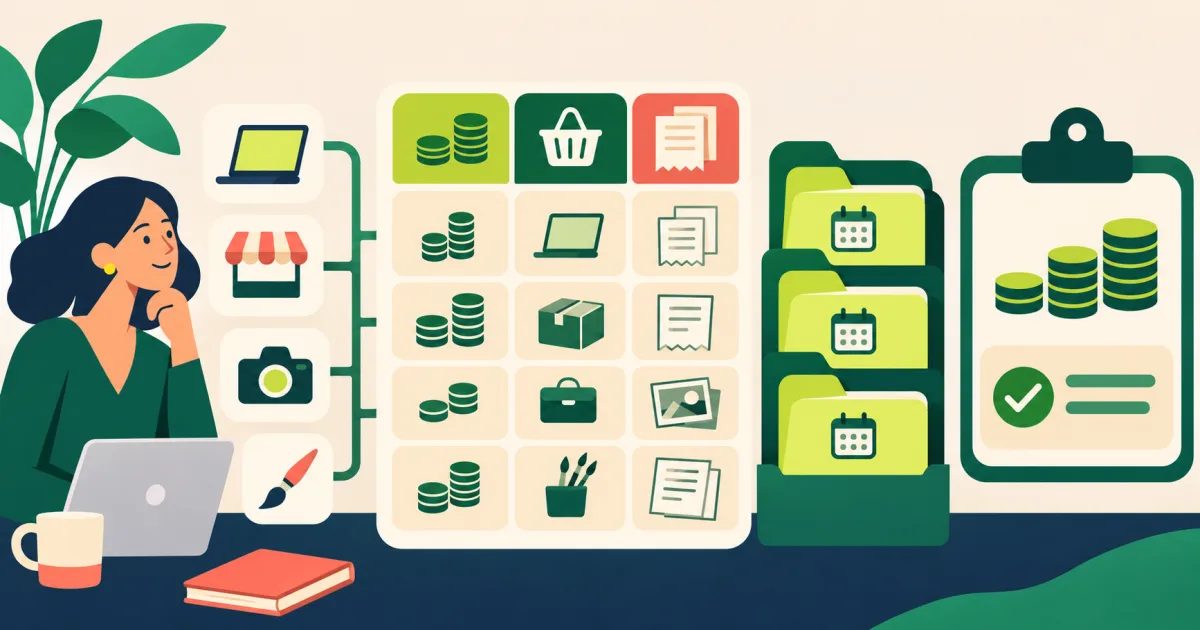
Classify side income by source, gross receipts, allowable costs, evidence and tax year before combining it with employment income.
2 November 2026Fifty practical articles explain salary records, payroll deductions and annual tax. They also cover compensation decisions, freelance work and multiple income streams with worked checks and clear jurisdiction limits.
Begin with a payslip, contract, tax record or income decision. The article library connects that evidence to a relevant calculator and a deeper income guide.

Check what payroll recorded before estimating what should reach the bank. Use the take-home pay calculator for a planning comparison. The salary and payslip hub explains the evidence behind each line.
Retirement contributions, social insurance and payroll tax withholding answer different questions. Review them separately in the payroll deductions hub. Then connect payroll to the full-year calculation through the income-tax guide.
Choose the article that matches the decision in front of you, not merely a word found on the payslip. Each article identifies the records to collect, the calculation boundary, a worked situation and the point where a local authority or qualified adviser is needed. Preserve the original figures before testing a correction.
Financial and employment rules vary by jurisdiction and effective date. Follow the cited intergovernmental or public reference for the general concept, then confirm the current local rule. The FROM.MY calculation methodology explains how to keep a planning estimate separate from an official assessment or payroll result.
Classify side income by source, gross receipts, allowable costs, evidence and tax year before combining it with employment income.
2 November 2026
Build a freelance record trail connecting work, invoices, receipts, bank deposits, platform fees and business-purpose costs.
2 November 2026
Organise rental receipts, tenancy records, deposits, agent statements and property expenses before preparing an annual tax summary.
2 November 2026
Set a side-income tax reserve using gross receipts, supported costs, employment income, scenarios and regular reconciliation rather than guesswork.
2 November 2026
Combine income from two employers without duplicating salary, losing payroll tax withholding records or assuming one payroll knows the other.
2 November 2026
Reconcile final tax with payroll tax withholding and other qualifying payments to understand why a refund or balance due appears after filing.
2 November 2026
Compare job offers using net pay, guaranteed cash, variable pay, benefits, working time, commute costs and transition risk.
2 November 2026
Calculate total compensation from salary, guaranteed cash, employer contributions, benefits and personal work costs without double counting.
2 November 2026
Estimate a pay raise after employee contributions, annual tax, effective date and added work costs rather than using gross percentage alone.
2 November 2026
Compare bonus and higher basic salary by certainty, recurring net cash, contribution treatment, future raises and household affordability.
2 November 2026
Calculate direct commute spending and travel time so a higher salary is compared with the real cost of reaching the workplace.
2 November 2026
Compare remote and office job offers using net pay, home-working costs, commute, schedule control, benefits and contractual location terms.
2 November 2026